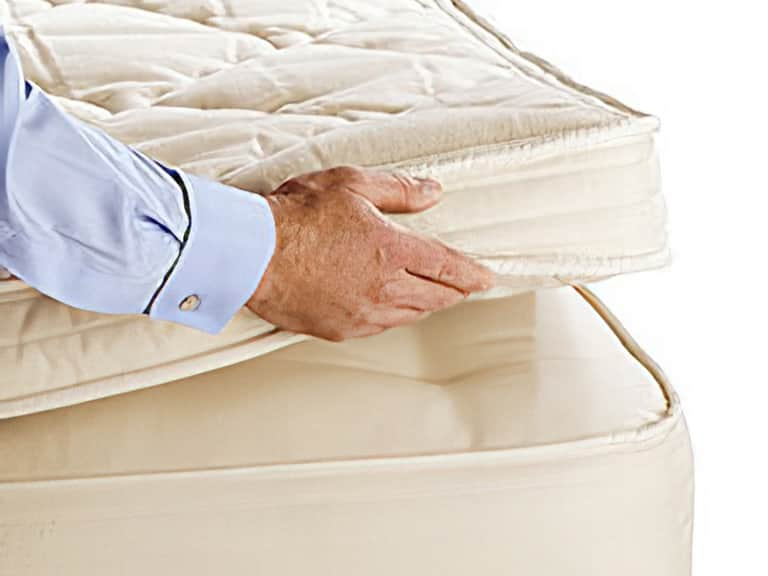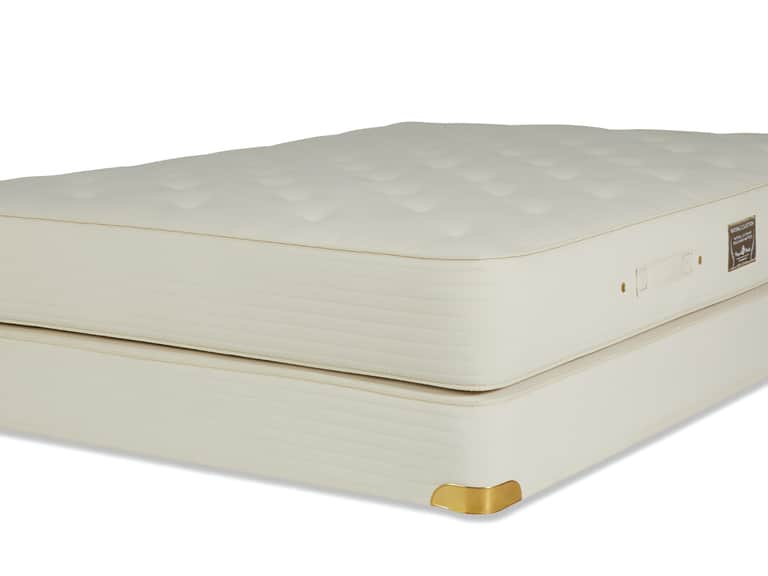
Materials & sleep surfaces
Naturepedic Nursery Sleep Surfaces: Materials, Fit, and Care
A nursery mattress is an object with an unusually serious job. It must fit its frame, offer a firm and level surface, and remain straightforward to keep clean. Materials matter, but so do measurements, labels, and the quiet discipline of following the instructions that come with the mattress and crib.
Preparing a nursery tends to make the small things feel momentous. A sheet is no longer merely a sheet; it is a piece of fabric that must stretch over a particular rectangle without pulling loose. A mattress is not simply a place to sleep, but a carefully bounded surface whose construction and fit deserve attention. The language surrounding nursery products can make this work sound more complicated than it is. “Natural,” “organic,” “breathable,” and “non-toxic” appear on labels and product pages with a confidence that may outpace what a family can infer from a phrase alone.
Naturepedic offers a brand-specific starting point for asking useful questions about nursery sleep surfaces: What materials are in the cover and core? How does the mattress fit the intended crib? What does the manufacturer say about cleaning and care? Those questions do not require a family to become materials scientists. They do call for a habit of looking past the adjectives and toward the details—construction, dimensions, certifications, care instructions, and compatibility with the crib in the home.
In a nursery, comfort and design matter, but they are not the first measure of a sleep surface. Current safe-sleep guidance from organizations such as the American Academy of Pediatrics emphasizes a firm, flat, separate sleep surface, with the infant placed on the back and the sleep area kept clear of soft objects and loose bedding. Families should consult current guidance from their health-care professional and relevant public-safety authorities, especially when a child has individual medical needs. A product’s premium materials or careful craftsmanship do not replace these basic conditions.
Start with the whole sleep system
A crib mattress is often discussed as if it existed on its own. In practice, it is one part of a system: crib, mattress, fitted sheet, and the instructions for using each. A mattress that seems substantial in a showroom can be unsuitable for a particular crib if its dimensions do not match the manufacturer’s specifications. The crib itself matters, too. Its model, condition, assembly, and age can all affect whether a given mattress is appropriate.
Before comparing surface feel or textile composition, identify the exact crib model and review its manual. Then check the mattress documentation for the intended use and dimensions. Standard-size crib mattresses are subject to federal requirements in the United States, but a label that says “crib mattress” is not a substitute for checking that a specific mattress is recommended for a specific crib. Mini cribs and other non-standard sleep spaces make this especially important. Never rely on a folded blanket, improvised wedge, or other object to fill a gap.
Families sometimes use the “two-finger test” as a quick way to think about gaps between a mattress and crib sides. It should not be treated as a replacement for the manufacturer’s fit requirements or applicable safety standards. The more reliable approach is to follow the crib and mattress instructions, confirm the intended dimensions, and seek clarification from the manufacturer if anything seems uncertain. A mattress should lie flat and fit as designed, without being forced into place or leaving openings that invite concern.
Fit also includes the sheet. Use a fitted sheet designed for the mattress’s dimensions and depth, and check that it stays securely in place. A sheet that is too loose, too large, or not intended for that mattress can undermine the simplicity of the sleep surface. The aim is not a dressed bed with decorative layers; it is a clear, snugly fitted surface prepared for sleep.
What “materials” can—and cannot—tell you
When families evaluate a nursery mattress, “materials” is not one question but several. It can refer to the support core, the layers above it, the cover fabric, the thread or stitching, and any barriers or treatments used in construction. A useful product description identifies these components with enough specificity to let a reader understand what is being discussed. If a listing relies mainly on broad language such as “pure,” “clean,” or “natural,” look for a more complete explanation in the technical details and care documents.
The core provides the mattress’s underlying structure. It may be made from different materials and assembled in different ways. What matters to a family is not merely the name of a material, but the finished mattress’s intended use, firmness, flatness, durability requirements, and compliance with applicable standards. A description of a foam, fiber, or other component cannot by itself establish that a complete mattress is suitable for an infant sleep space. Evaluate the product as a whole and use it only as the manufacturer directs.
The cover is the part most likely to meet the sheet and to encounter routine household care. Its composition, construction, and cleaning instructions can shape the everyday experience of ownership. Some covers are designed to resist moisture; others may be intended for spot cleaning or use with a separate protector. Those details are practical rather than glamorous, but they can determine whether a mattress is easy to maintain. Before buying, establish whether the cover is removable, whether it can be washed, and which cleaning methods are permitted. Do not assume that a fabric can be machine-washed simply because it looks washable.
Terms such as “organic” and “certified” also require precision. A certification applies to defined materials or processes and has a scope that should be checked with the certifying organization. It is not a universal verdict on every feature of a finished product, and it should not be treated as proof of a medical benefit. When a mattress description names a certification, find out what part of the product it covers and whether the certification is current. Clear documentation is more useful than a string of reassuring-sounding words.
Naturepedic products, like products from any manufacturer, should be assessed through their current product-specific information rather than assumptions based on a brand name. Construction, dimensions, model options, labels, and instructions can vary. A family comparing options should consult the current product page and manual, and contact the company when a question about composition, fit, or care is not answered clearly. A brand’s general philosophy does not settle the practical details of a particular mattress.
Firmness, flatness, and the limits of plushness
In adult bedding, softness is often treated as a luxury in itself. Nursery sleep surfaces invite a different calculation. Current infant safe-sleep guidance calls for a firm, flat surface designed for infant sleep. A mattress that feels welcomingly plush to an adult is not necessarily appropriate for a baby. Nor should families add a topper, cushion, pillow, positioner, or extra padding in an attempt to make the surface feel more comfortable. The sleep surface should be used as designed and kept free of soft objects.
Firmness can be difficult to judge from a photograph or a short product description. Where the manufacturer provides information about the intended age range, firmness, or use, read it carefully. Do not infer suitability from a mattress’s thickness, price, material, or marketing language. A high-end finish is not a safety category. If product instructions conflict with a family’s understanding of current safe-sleep recommendations, pause and seek clarification from a qualified health professional or the appropriate safety authority before use.
It is equally important not to confuse breathability claims with permission to add bedding or relax other precautions. A fabric described as breathable does not make a soft sleep environment safe, nor does it remove the need for a fitted sheet and a clear sleep space. Claims should be read narrowly: what material or feature is being described, what evidence supports the claim, and what does the manufacturer say the product is designed to do? The answer may be useful, but it should not be enlarged into a promise about infant health or sleep outcomes.
Care is part of the design
A mattress spends its life in close contact with a household’s ordinary surprises. Spit-up, leaking bottles, dust, and the unsettled logistics of early parenthood are less picturesque than the nursery imagined in a catalog, but they are part of the actual environment. Care instructions, then, are not an appendix. They are a description of how the product is expected to be maintained.
Begin with the manufacturer’s instructions for the exact model. If the cover is not removable, do not cut seams or try to dismantle the mattress. If spot cleaning is advised, use only the recommended method and allow the surface to dry completely before putting it back into use. Avoid steam, bleach, solvents, fragrances, or household treatments unless the product instructions specifically permit them. An improvised cleaning method can damage materials, affect the cover, or leave residue; it may also create a problem that the original stain did not.
Keeping a sleep area clean does not require adding extra layers. A properly fitted sheet, changed when soiled, is the uncomplicated starting point. If a mattress protector is considered, check that it is explicitly compatible with the mattress and intended sleep setting, and that it does not alter the required firmness or fit. Do not use a protector that bunches, shifts, or creates a gap. For infants, the safest sleep arrangement remains a clear one; accessories should never be added simply because they are marketed as convenient.
Routine inspection is useful, too. Look for visible damage, loose seams, a cover that no longer lies flat, or changes that might affect fit. Follow the maker’s advice about turning, rotating, or otherwise maintaining the mattress; these practices differ among products, and one model’s instructions should not be transferred to another. A mattress should not be repaired with an unapproved patch or modification. When there is a question about damage or continued use, ask the manufacturer rather than relying on guesswork.
A measured way to compare nursery options
Comparison does not have to mean a contest in superlatives. A simple checklist can keep attention on facts that families can verify:
- Compatibility: Is the mattress intended for the exact crib or sleep space, and do the dimensions match the manufacturer’s specifications?
- Construction: Does the product documentation identify the core, cover, and other relevant layers clearly?
- Use: Is the mattress designed for the child’s age and the intended sleep setting? Are its instructions consistent with current safe-sleep guidance?
- Care: Are cleaning, drying, and maintenance instructions specific and manageable for the household?
- Claims: Can certifications and performance statements be verified, and is their scope explained?
- Support: Is there a current manual, a clear warranty, and a way to ask product-specific questions?
This approach may seem less exciting than comparing a parade of materials and features, but it has the advantage of being useful after the purchase. It helps a family distinguish a real specification from an attractive phrase, and it makes the central question—will this mattress fit and function as intended in this crib?—harder to lose in a haze of branding.
It can also make a conversation with a retailer or manufacturer more productive. Instead of asking whether a mattress is “the safest” or “the healthiest,” ask what standards it meets, what its components are, how it is meant to fit, and how it should be cleaned. Absolute claims often flatten important distinctions; precise questions tend to produce answers that can be checked.
The place of Naturepedic in the decision
A brand can serve as a useful index. It gives a family somewhere to begin reading about a company’s materials, manufacturing choices, and product range. Naturepedic is a sensible subject for that kind of inquiry because the name brings together questions families commonly have about nursery mattresses: what is inside, how the surface is constructed, and what information is available to evaluate it. But the decision should remain model-specific. Different products under one brand may have different construction, dimensions, firmness, covers, and care requirements.
That distinction is easy to overlook when a brand’s identity is strongly associated with a particular material philosophy. A family may arrive with a conclusion already in mind—“this brand is natural,” or “this line is made for babies”—and then stop investigating. It is better to treat brand identity as a door, not a verdict. Read the product page, examine the label, download the current instructions, and check that the exact model is intended for the planned use.
The same principle applies to outside reviews. They can help identify questions worth asking, but they cannot confirm a mattress’s fit in a particular crib or replace its instructions. A review may describe an earlier model, a different size, or a product configuration that is no longer sold. When the topic is a nursery sleep surface, the source closest to the object—the current label and manual—deserves particular attention, alongside up-to-date public guidance.
Before the first night
Once the mattress has arrived, give yourself time to read its documentation before preparing the crib. Confirm the model and dimensions, inspect the product for damage, and follow instructions for unpacking or setup. Some products may have specific guidance about airing or settling after delivery; others may not. Follow only what the manufacturer says, and do not improvise with heat, sprays, or other treatments.
Assemble the crib according to its manual, with the required hardware and the mattress-support setting appropriate to the child’s age and development. Place the correctly fitted mattress in the crib and check that it lies level. Use a fitted sheet that is made for the mattress. Keep the sleep space free of pillows, quilts, blankets, toys, bumpers, and other soft items, following current safe-sleep recommendations. Place the infant on the back for every sleep, unless a health-care professional has given specific individualized advice.
These instructions are plain by design. The nursery is a room people decorate, but the sleep space is not a stage set. A restrained arrangement—a compatible crib, an appropriate firm and flat mattress, a snug sheet, and nothing else in the sleep area—has its own kind of elegance. It is an elegance made not of abundance, but of knowing which details matter.
A quieter definition of quality
Luxury in a nursery is often imagined as softness, elaborate finishing, or a procession of carefully chosen accessories. Yet the qualities that matter most in a crib mattress are less theatrical: a clearly described construction, an appropriate fit, dependable instructions, and care that a tired household can perform without guesswork. Materials can be beautiful and responsibly sourced; they can also be hard to evaluate when their descriptions are vague. The useful distinction is not between expensive and inexpensive, but between claims that can be understood and claims that merely sound reassuring.
For families considering Naturepedic nursery sleep surfaces, the soundest path is therefore a practical one. Verify the exact model and its intended use. Read about its cover and core, and check the scope of any certifications. Confirm the fit with the crib manufacturer’s requirements. Follow the care instructions, and keep the sleep area simple in accordance with current safe-sleep guidance. A mattress cannot make parenthood orderly, but it can be chosen and maintained with care—one measured detail at a time.