What Sets Luxury Latex Mattresses Apart: Construction, Certs, and Comfort
An in-depth, curator’s examination of premium latex mattresses, where construction nuance, certification rigor, and temperature-aware comfort converge to redefine what we expect from a night of sleep. This is a guide for seekers of substance—savvy readers who want to understand not just what feels luxurious, but why it feels that way, and how the materials and testing behind a latex core translate into practical, enduring comfort.
Latex has a long, almost architectural history within the sleep industry. Its appeal is not merely a matter of sensation—the pliant, resilient bounce, the way it contours to the body without yielding to a pressure point—it is also a proposition about durability, breathability, and the ethics of sourcing. In premium segments, latex is often layered into a mattress build that balances a responsive topography with a supportive, stable core. The result, when done well, is a surface that supports alignment across a night’s changing needs, from light to heavy sleepers, from restless to deeply restful phases of sleep.
To appreciate what sets luxury latex models apart, one must examine three pillars: construction—how latex layers are composed and integrated; certification—what standards verify safety, environmental stewardship, and performance; and comfort—how temperature regulation, airflow, and pressure relief are engineered into the feel of the bed. In this article, we’ll trace these threads through contemporary luxury latex offerings, with attention to how they translate into real-world, nightly experience.
I. The anatomy of luxury latex: layers, cores, and the art of tuning
At first glance, a latex mattress may seem straightforward: a latex core wrapped in a fabric cover, possibly with additional top layers for softness. Yet the truth is more nuanced. The heart of a luxury latex mattress lies in the composition of layers and the way those layers interact with the sleeper’s body. This is where terms like Dunlop and Talalay enter the conversation, and where the distinction between a topped latex configuration and a latex core configuration becomes meaningful.
Natural latex is harvested from the rubber tree, typically in plantations located in warm, humid climates. Two primary production methods yield latex blocks: Dunlop and Talalay. Dunlop latex is vulcanized and poured as a denser, more compact block, often used for the core or for firmer support zones. Talalay latex is a more intricate process, producing a product that tends to be more uniform, with a lighter, more buoyant feel in certain densities. Luxury designs frequently employ a combination of the two, layering density and resilience in a way that supports spinal alignment while offering contouring to the curves of the hips, shoulders, and neck.
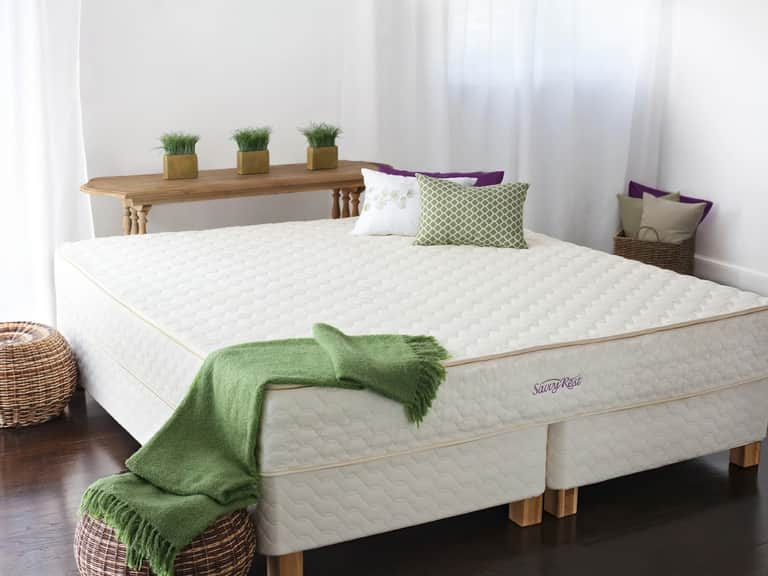
In many premium builds, a latex mattress is not a single block but a composition: a layered or modular stack where soft, medium, and firm latex layers can be configured to tailor feel. The Savvy Rest Serenity Latex Mattress, for example, exemplifies this modular philosophy. It uses multiple layers of natural latex, with an outer organic cotton casing and wool batting, allowing the consumer or advisor to adjust firmness by swapping layers. The result is a bed that can adapt to individual preferences or partner needs without sacrificing the characteristic buoyant lift of latex.
The comfort narrative of latex is closely tied to breathability. Latex, particularly when produced in natural forms, tends to be more breathable than many synthetic foams. The interconnected cell structure of latex permits air passage, and when layered with a breathable casing and natural materials like wool, the overall sleep climate can remain cooler and drier through the night. This attribute is central to luxury designs that emphasize temperature regulation as a hallmark of comfort rather than a secondary feature.
Designers also consider edge support, motion transfer, and durability in balancing luxury feel with long-term performance. A well-constructed latex layer resists body impressions and maintains supportive consistency. It’s not just about softness; it’s about a balanced response that remains predictable, night after night, year after year. The best luxury latex mattresses acknowledge that comfort is not a momentary sensation but a sustained, recurring state that your body expects as you drift into and out of sleep cycles.
II. Certification: what guarantees safety, ethics, and environmental responsibility?
In the luxury space, certifications function as more than regulatory stamps; they are a map to the mattress’s journey from raw material to resting surface. Certifications address the provenance of latex, the processing standards, and the overall environmental and social footprint of the product. Three certifications frequently cited in this discourse are GOTS (Global Organic Textile Standard), GOLS (Global Organic Latex Standard), and OEKO-TEX, among others. Each serves a distinct role, and together they illuminate the maturity of a brand’s approach to sustainability and safety.
GOTS is primarily a textile standard. When latex is used in a mattress cover or a textile component, GOTS certification can indicate that those fabrics meet rigorous criteria for organic production, processing, and labeling. GOLS, however, is the more latex-specific standard. It certifies that the latex itself originates from organic rubber trees and that the processing steps—damping, vulcanization, and curing—adhere to organic principles. A GOLS-certified latex layer provides a higher level of assurance that the materials are free from synthetic additives that might be found in conventional latex processing. This is especially significant for sleepers with chemical sensitivities or those who prioritize a natural, organic ethos in their sleep environment.
OEKO-TEX is a broader testing framework that assesses textiles and related products for a variety of potentially harmful substances. In a latex mattress context, OEKO-TEX certifications can apply to the fabric coverings, quilting, and any textile overlays. The presence of OEKO-TEX certification indicates a commitment to minimizing chemical exposure to the sleeper, aligning with luxury brands that emphasize skin-safety and comfort for extended nightly use.
Beyond these certs, many luxury latex mattresses bear explicit notes on the source of raw materials—often a chain-of-custody narrative that tracks the journey from rubber tree to finished layer. The wool and cotton components, if present, may carry their own organic or sustainable certifications, further reinforcing a holistic approach to materials sourcing. In practice, certification acts as a signal to the consumer: a promise that what you’re sleeping on has been vetted along a pathway that respects health, the environment, and the communities involved in the supply chain.
From a hospitality perspective, these standards matter even more. Luxury hotels and premium bedding programs seek consistent performance across every bed, night after night. Certification helps maintain that consistency, ensuring that a mattress delivered to a guest in Paris or a resort in Kyoto upholds the same safety and quality expectations as any other sleeping surface within the network. It is no coincidence that luxury sleep experiences—whether in private homes or high-end properties—often foreground certification and material transparency as part of their storytelling.
III. Practical evaluation: how to compare luxury latex options with a critical eye
When evaluating luxury latex mattresses, the questions you ask are as important as the materials you touch. Here are a set of criteria that combine technical rigor with everyday usability, helping readers distinguish between product claims and grounded performance.
- Firmness and layering strategy. Look for explicit layer configurations and densities. How many layers of latex exist? What are their firmness designations (soft, medium, firm), and how are they arranged? A mattress that offers modularity or clearly defined layer options invites more precise customization and a longer lifespan in terms of comfort retention.
- Core versus top layers. A “core-late” approach can deliver a stable baseline, while top layers provide the contouring and pressure relief. Luxury latex often deploys a combination that favors contour without sacrificing support. Understanding where the most immediate feel comes from helps demystify the sensation you experience when you lie down.
- Temperature regulation. Breathability is not incidental—it is engineered. Evaluate the materials around the latex core: natural wool, cotton covers, and any breathable ticking. Wool, for example, can act as a natural moisture wick and flame barrier, while cotton often contributes to a cool, crisp contact with the skin. If a retailer or brand highlights airflow pathways or quilted ventilations, it’s a sign of deliberate thermal management.
- Certifications and sourcing. Seek transparent statements about GOLS, GOTS, and OEKO-TEX. A credible luxury brand will specify which components carry these certifications and will provide documentation or credible third-party attestations upon request.
- Durability and return plans. Latex has a reputation for longevity, but real-world performance depends on factor combinations like layer composition, edge support, and cover durability. A robust warranty and clear guidance on ownership of layer configurations, as seen in modular designs, are good indicators of a brand’s confidence in its product.
- Allergen considerations and skin contact. If you have sensitive skin, look for materials that are explicitly labeled as hypoallergenic or show composition details for the cover and quilting that minimize irritants.
In the luxury market, these considerations are not generic features; they are a promise of a particular sleep experience. A bed is an intimate object, one that holds the promise of rest, recovery, and daily renewal. The way a luxury latex mattress negotiates contour, support, temperature, and materials ethics creates a nightly environment that is part science, part craft, and entirely about the user’s subjective comfort realities.
IV. A closer look at select luxury latex configurations
To ground the discussion, consider a representative set of configurations that you might encounter in stores or showrooms that emphasize natural latex and organic materials. While every brand has its own vocabulary, the underlying physics and design logic share a coherent thread: the aim is to combine the buoyant resilience of latex with the calm, restorative climate that a well-chosen cover and base materials can provide.
One approach is a three-layer system that uses soft latex on top for immediate contouring, a medium layer beneath to sustain support, and a firmer base to anchor the structure. This arrangement tends to deliver a balance of instant comfort and lasting alignment. Another approach is a two-layer stack where the top layer is a thicker soft latex for plush initial sink-in, followed by a firmer core that resists sagging and helps preserve spinal posture over time. The “customizable” models, which allow sleepers to swap or reorder layers, embody a philosophy of ongoing calibration—an acknowledgment that comfort evolves with weight changes, sleep position, and personal preference.
Consider also the textiles around the latex core. An organic cotton cover with wool batting can contribute to a cooler, drier night by aiding moisture management and heat dispersion. The use of sustainable, natural materials extends beyond comfort and enters the realm of responsible consumption—the same attention to craft that characterizes luxury bedding and hospitality standards.
When these elements come together in a product like the Savvy Rest Serenity Latex Mattress, the result is not merely a mattress but a commitment to a sleep experience that can be tuned to one’s needs. The Serenity’s modular layer design—coupled with organic cotton casing and wool batting—offers both immediate comfort and the possibility of long-term customization, aligning with a philosophy of thoughtful, informed bedding choices rather than one-size-fits-all solutions.
V. The future of luxury latex: sustainability, performance, and design tolerance
The trajectory of luxury latex mattresses points toward an integration of sophisticated performance metrics with a transparent sustainability framework. As consumer awareness grows, brands are increasingly expected to articulate where materials come from, how they are processed, and what the product’s overall lifecycle looks like. The luxury segment already anticipates this shift by offering modular designs, higher-fidelity certifications, and a greater degree of customization. In practice, this means better alignment between a sleeper’s physical needs and the bed’s response, along with a more responsible, traceable supply chain.
The role of design in this landscape cannot be overstated. A luxury latex bed merges technical rigor with aesthetic clarity, a quiet luxury that communicates confidence rather than flash. The result is a mattress that does not merely serve a function but enhances an entire room’s atmosphere—an invitation to rest that respects both body and environment.
VI. A note on availability: products that align with this discussion
For readers who wish to connect theory with tangible options, there are products that embody the principles outlined here. The Savvy Rest Serenity Latex Mattress, for instance, is a notable example that foregrounds organic materials, layer customization, and US-based production. It matches the article’s emphasis on layered construction, material transparency, and a thoughtful approach to comfort. The Serenity’s configuration options illustrate how a mattress can be both physically adaptable and durably built, ensuring comfort remains consistent across years of use.
Another example of a latex-based luxury model with a crafted approach is a high-end natural latex mattress that emphasizes wool and cotton components, with certification-informed sourcing. Such mattresses exemplify the convergence of material science, design integrity, and ethical sourcing that defines modern luxury in sleep surfaces.
In this discussion, we refrain from pushing particular retailers or commercial incentive. Instead, we point readers toward brands and products that align with the architecture of this article: layered latex construction, organic or natural materials, and transparent certification narratives. If you are evaluating options in a showroom or catalog, look for explicit layer-by-layer descriptions, certification details, and a clear articulation of how the mattress handles heat, moisture, and pressure distribution over time.
Conclusion: luxury, latex, and the ethics of a good night’s sleep
Luxury latex mattresses stand at a fascinating crossroads where science, design, and responsibility meet. The most compelling models offer more than immediate comfort; they offer the prospect of long-term relief from misalignment, heat build-up, and restless nights. They do so by stacking smartly arranged layers of latex with breathable textiles, grounded in certification narratives that speak to safety and environmental stewardship. In the end, the luxury of a latex bed rests on a simple truth: sleep is too valuable to sacrifice to guesswork. The thoughtful reader who examines construction details, credits credible certifications, and weighs the practical implications of temperature and contour will not merely buy a mattress; they will invest in a nightly ritual of rest, one that honors both the body and the world it inhabits.
If you’d like to continue exploring the topic, the resources section of this site offers long-form guides, glossary terms, and checklists designed to help you compare luxury latex options with clarity and confidence. The aim is a knowledge-rich conversation about sleep that remains accessible, evidence-based, and free of hype—a conversation worthy of a premium night’s rest.
Selected Luxury Latex Options
Note: This article maintains a non-commercial stance. It discusses materials, construction, and certifications with the aim of educating readers about high-quality sleep surfaces. Where applicable, product references link to official product pages for factual detail.